


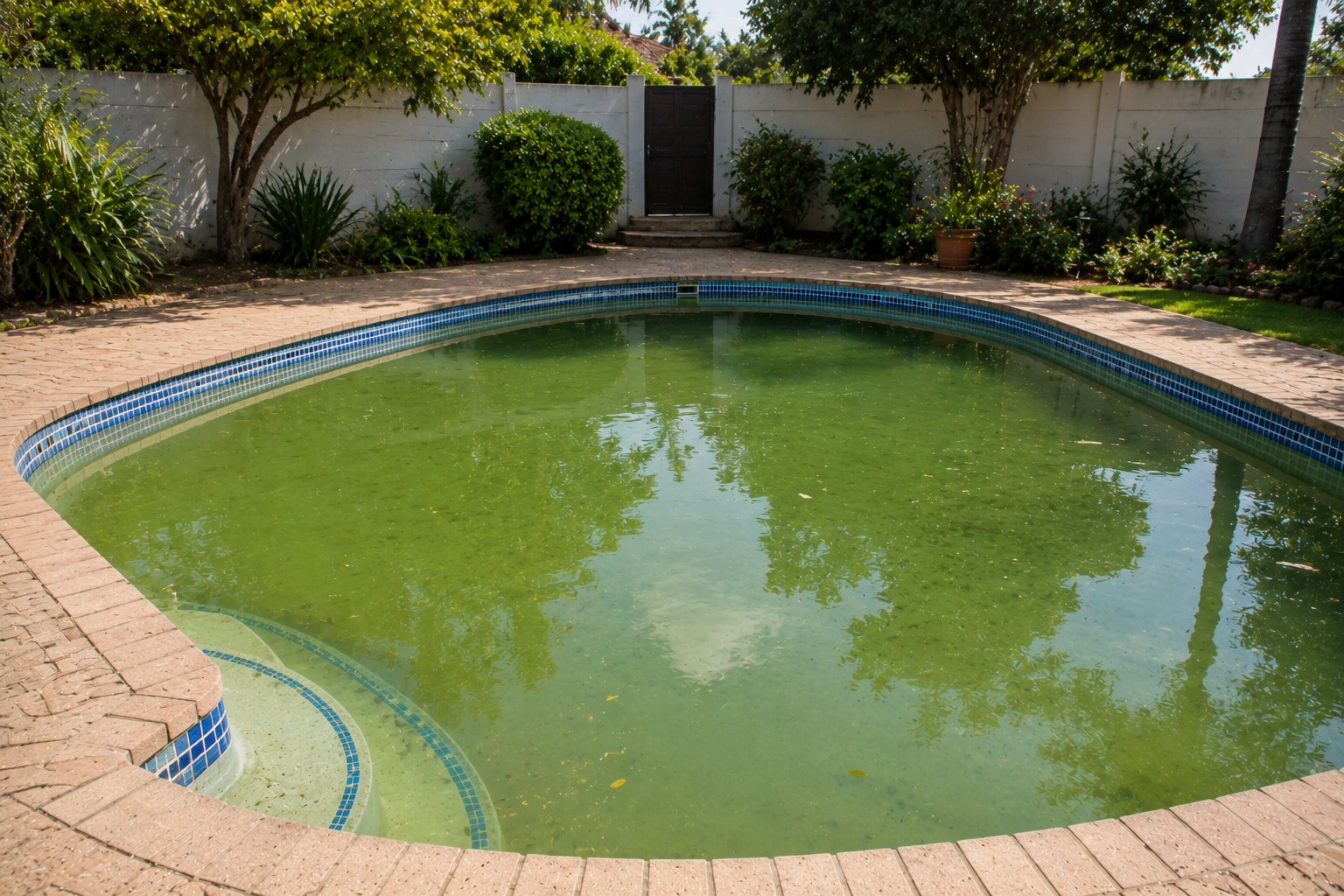
Few things frustrate swimming pool owners more than walking outside and finding the water green, cloudy, or dull instead of clear and inviting.
In Zimbabwe, this problem is especially common during hot summer periods, after storms, or when pool maintenance has been inconsistent for even a short time.
Many homeowners immediately assume the worst. Some believe the entire pool must be drained, while others begin adding large amounts of chemicals without fully understanding what caused the problem in the first place.
Unfortunately, both approaches often make the situation more expensive and harder to fix.
The good news is that most green or cloudy pools can recover without draining the water completely.
In many cases, the problem is caused by algae growth, poor circulation, dirty filters, or chemical imbalance rather than permanently damaged water.
Understanding the real cause is the first step toward restoring the pool properly and preventing the same issue from returning again.
Struggling With Green or Cloudy Pool Water?
Fill in the form below for professional help with algae treatment, water balancing, and swimming pool cleaning solutions.
Why Pool Water Turns Green
Green swimming pool water is usually caused by algae growth. Algae develops when chlorine levels drop too low, circulation becomes weak, or the filtration system stops removing contaminants effectively.
Zimbabwe’s climate creates ideal conditions for algae because warm temperatures and strong sunlight encourage rapid growth, especially during summer.
A pool can sometimes begin turning green surprisingly quickly after heavy rain, equipment failure, or several missed maintenance cycles.
Storms are another major contributor. Rainwater often introduces dirt, organic debris, and contaminants into the pool while simultaneously disrupting chemical balance.
If chlorine levels are already low, algae can spread very rapidly afterward.
Poor circulation also makes the problem worse. Even if chemicals are added correctly, stagnant water areas allow algae to develop more easily because sanitisers are not moving evenly throughout the pool.
This is one reason properly sized pool pumps and efficient filtration systems are so important for long-term water quality.
Why Pool Water Becomes Cloudy
Cloudy pool water is not always caused by algae. In many cases, cloudy water develops because the filtration system is struggling to remove fine debris and microscopic contaminants properly.
Dirty filters, blocked circulation, chemical imbalance, poor backwashing, or excessive debris buildup can all contribute to dull or cloudy water conditions.
Sometimes homeowners add too many chemicals in an attempt to fix minor problems quickly. Ironically, overcorrecting the chemistry may actually make the cloudiness worse.
High swimmer usage can also affect clarity because sunscreen, oils, dust, and organic contaminants gradually accumulate in the water.
Pools relying heavily on borehole water sometimes experience additional cloudiness because of mineral content and water hardness.
Over time, dissolved minerals may affect water clarity if the chemistry is not managed carefully.
Cloudy water often develops gradually rather than overnight, which is why many homeowners do not notice the problem becoming serious until visibility drops significantly.
The First Thing You Should Check
Before adding large amounts of chemicals, the first step is always checking whether the circulation system is functioning properly.
A pool with poor circulation cannot recover efficiently even when the chemistry is corrected. If the pump is struggling, the filter is dirty, or water movement is weak, the pool may continue staying cloudy or green despite repeated chemical treatment.
Check whether:
- the pump is running properly
- water is flowing strongly through the returns
- the filter pressure is unusually high
- skimmer baskets are blocked
- debris is restricting circulation
One of the most common mistakes homeowners make is focusing only on chemicals while ignoring filtration problems completely.
Proper circulation is what allows the chemicals to move consistently throughout the pool and actually eliminate algae and contaminants effectively.
Need Help Restoring Your Pool Water?
Fill in the form below for professional algae treatment, pool cleaning, filtration checks, and water recovery solutions.
Step-by-Step Recovery for Green or Cloudy Pools
Once the circulation system is working properly, the recovery process becomes much easier.
The first step is usually removing as much visible debris as possible. Leaves, dirt, and organic material consume chlorine quickly, making algae treatment less effective if the debris remains inside the pool.
Brushing the pool walls and floor is also important because algae often clings to surfaces even before it becomes fully visible in the water.
After brushing, shock treatment is commonly used to rapidly increase chlorine levels and destroy algae, bacteria, and organic contaminants. The exact amount depends on the severity of the problem and the size of the pool.
The filtration system should then run continuously for an extended period to help remove dead algae and suspended particles from the water.
Backwashing may also become necessary during recovery because filters clog faster when clearing algae and cloudy debris.
Many pools begin improving significantly within a few days once circulation, filtration, and chemical balance are corrected properly.
However, severe algae outbreaks may require repeated treatment cycles before the water fully clears again.
Why Draining the Pool Is Often Unnecessary
One of the biggest misconceptions among homeowners is the belief that green water automatically means the pool must be emptied completely.
In reality, many green pools recover successfully without draining. As long as the water chemistry is still manageable and the circulation system is functioning properly, treatment is usually possible.
Draining too quickly often wastes water unnecessarily while increasing the cost of rebalancing the pool afterward.
There are situations where partial or full draining becomes necessary, particularly when water chemistry has deteriorated severely over long periods or when total dissolved solids become excessively high.
However, most ordinary algae outbreaks do not require complete water replacement.
This is why professional pool technicians usually inspect the condition of the water and equipment before recommending draining.
Many pools that appear terrible visually are still chemically recoverable.
Common Mistakes Homeowners Make
One of the most common mistakes is adding excessive chemicals too quickly without testing the water properly first.
Overcorrecting chemical balance may create additional cloudiness, surface irritation, or unstable chlorine levels that make the recovery process more difficult.
Another mistake is switching the pump off too early during treatment. Even after the water begins improving visually, the filtration system still needs time to remove microscopic debris and dead algae completely.
Neglecting filter cleaning is also extremely common. A clogged filter cannot clear cloudy water efficiently no matter how many chemicals are added.
Some homeowners also underestimate how quickly algae develops in Zimbabwe’s hot climate. Waiting several days before responding to early green patches often allows the problem to spread much more aggressively.
Consistent maintenance almost always prevents larger recovery problems later.
When Professional Help Is Usually Needed
Some pool problems become too severe or too technical for simple DIY recovery.
Persistent green water, recurring algae outbreaks, strong chemical smells, damaged equipment, severe cloudiness, or circulation failure often require professional inspection to identify the underlying cause properly.
Older pools sometimes develop hidden filtration problems, plumbing restrictions, or pump issues that prevent proper water circulation even when the chemistry appears correct.
In some cases, poor pool design or undersized circulation systems contribute to repeated water quality problems year after year.
Professional swimming pool maintenance services usually identify these deeper issues much faster than trial-and-error chemical treatment alone.
For commercial properties, guesthouses, hotels, and heavily used residential pools, professional servicing also helps maintain more consistent water quality throughout the year.
How to Prevent Green or Cloudy Water Long Term
Prevention is far easier and cheaper than recovery.
Consistent cleaning, regular backwashing, balanced chemistry, and proper circulation are the foundation of healthy pool water. Pools that receive regular maintenance usually avoid severe algae outbreaks altogether.
Running the filtration system for the correct number of hours each day is also important, especially during hot summer periods when algae develops more aggressively.
Routine equipment inspections help detect circulation problems early before they begin affecting water quality visibly.
Pool covers can also reduce contamination by limiting debris, evaporation, and excessive sunlight exposure.
Many homeowners only realise how important preventative maintenance is after dealing with repeated algae recovery costs and frustration.
Final Thoughts
Green or cloudy pool water is extremely common in Zimbabwe, especially during hot weather, storms, or periods of neglected maintenance.
Fortunately, most pools can recover successfully without needing complete draining.
In many cases, the real problem is poor circulation, dirty filtration systems, algae growth, or unstable water chemistry rather than permanently damaged water itself.
The key is identifying the underlying cause correctly before rushing into expensive or unnecessary solutions.
With proper circulation, filtration, chemical balancing, and consistent maintenance, most swimming pools can return to clear and healthy water conditions relatively quickly.
Is Your Pool Water Green or Cloudy?
Fill in the form below for expert help with pool cleaning, algae treatment, filtration problems, and long-term maintenance solutions.


Comments are closed