


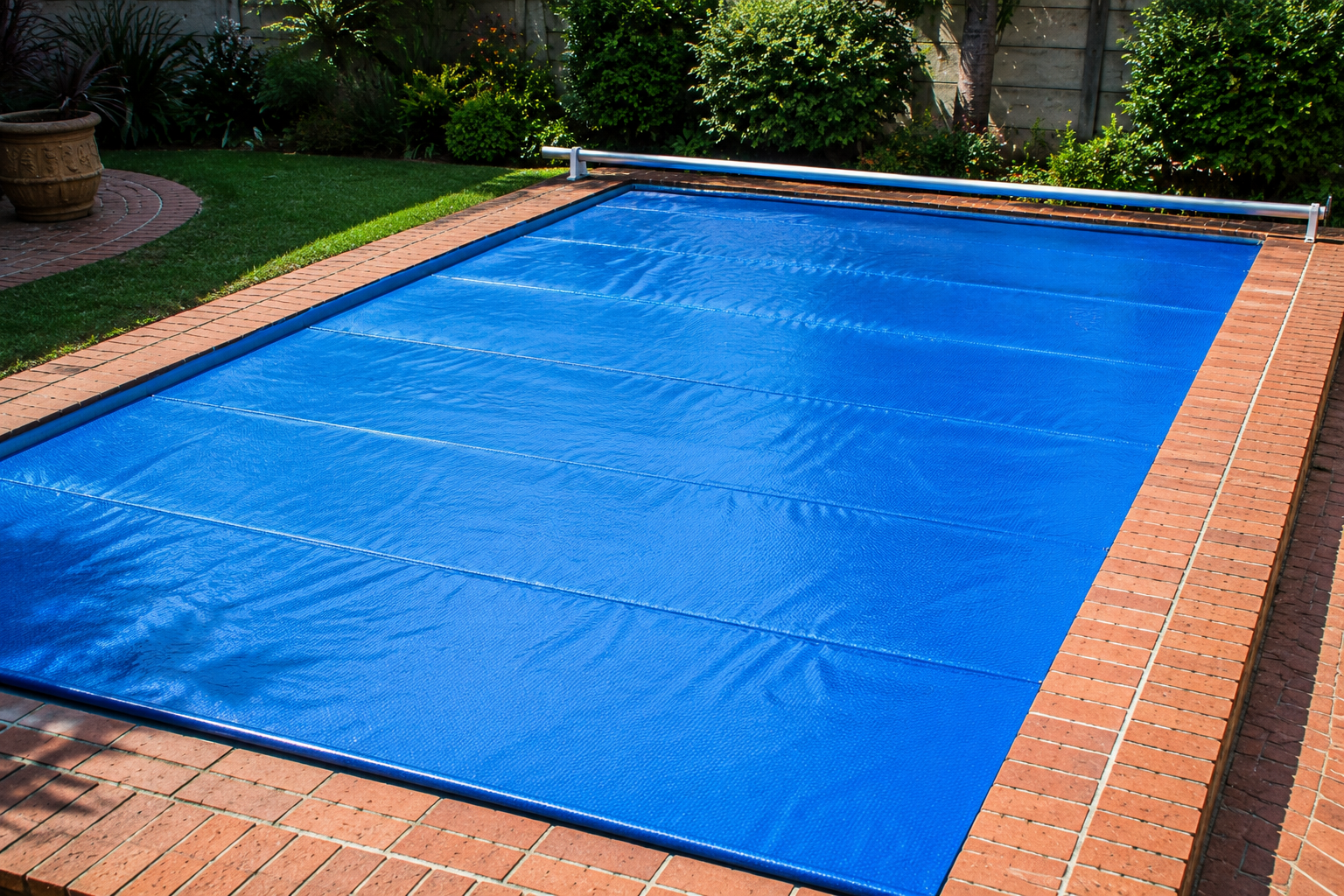
Many swimming pool owners in Zimbabwe underestimate how much water, heat, and maintenance effort their pool loses every single week. During hot weather, it is common for pools to lose noticeable amounts of water through evaporation alone, especially when the pool remains uncovered for long periods.
At first, many homeowners simply top up the water and move on without thinking much about it. Over time, however, the constant water replacement, increased chemical usage, debris buildup, and heat loss begin adding to the overall cost of owning a pool.
This is usually the point where people start considering pool covers.
Some homeowners see pool covers as unnecessary accessories, while others view them as essential for reducing maintenance and operating costs. The truth is that pool covers can provide significant benefits in Zimbabwe’s climate, especially for homeowners concerned about water conservation, heating efficiency, safety, and cleaner pool water.
The important question is not simply whether pool covers work. It is whether the long-term savings and convenience justify the initial investment for your specific pool.
Thinking About Installing a Pool Cover?
Fill in the form below for advice on pool covers, heating efficiency, and water-saving solutions for your swimming pool.
Why Pools Lose So Much Water in Zimbabwe
Many homeowners are surprised by how quickly swimming pools lose water, particularly during hot and windy periods.
Evaporation is the biggest reason. Zimbabwe’s warm climate, strong sunlight, and dry conditions create ideal circumstances for continuous water loss from exposed pool surfaces. Wind increases the problem further by accelerating evaporation throughout the day.
Even pools that appear perfectly normal can lose large amounts of water over time without any leak being present.
This constant evaporation affects more than just water levels. As water evaporates, the pool also loses heat and chemical balance. Homeowners often end up adding fresh water, extra chlorine, and balancing chemicals more frequently simply to maintain stable conditions.
Pools without covers also collect more debris, insects, leaves, and dust, particularly during windy weather or storms.
Over time, this creates additional cleaning work and places extra pressure on the filtration system.
How Pool Covers Reduce Evaporation
One of the biggest advantages of a pool cover is reducing evaporation significantly.
By covering the surface of the water, the pool loses far less moisture to the surrounding air. This becomes especially noticeable during hot summer periods when uncovered pools may require frequent top-ups.
For many homeowners, reducing evaporation alone already creates meaningful savings over time, especially in areas where water conservation is becoming increasingly important.
Pools supplied by boreholes also benefit because reduced evaporation means less frequent refilling and lower pressure on water systems.
A properly fitted pool cover also helps maintain more stable water chemistry because fewer contaminants and less fresh water dilution affect the pool regularly.
This often reduces the amount of chemicals required to keep the water balanced properly.
Pool Covers Help Retain Heat
Many people only associate pool covers with debris protection, but heat retention is actually one of their most valuable benefits.
Pools naturally lose heat overnight through evaporation. Even heated pools can cool down surprisingly quickly if left uncovered during colder evenings.
A pool cover helps trap heat inside the water for much longer periods. This reduces the amount of energy required to maintain comfortable swimming temperatures, especially for pools using heating systems.
In Zimbabwe, where many homeowners are now installing pool heat pumps and solar heating systems, covers often improve efficiency significantly.
Without a cover, much of the heat generated by the heating system escapes into the air overnight. The heating equipment then works harder and consumes more electricity to restore the temperature again the following day.
Many homeowners only realise how important a pool cover is after investing in pool heating and seeing how quickly uncovered pools lose warmth.
Want to Reduce Pool Maintenance and Water Loss?
Fill in the form below for help choosing the right pool cover for your swimming pool and property.
Cleaner Pools Require Less Maintenance
Pool covers also reduce the amount of debris entering the water.
Leaves, insects, dust, pollen, and dirt accumulate far more slowly when the pool remains covered during periods of non-use. This reduces strain on the filtration system and helps maintain clearer water conditions for longer.
Pools located near trees benefit especially because falling leaves and organic material are among the biggest causes of clogged skimmers, dirty filters, and algae-friendly conditions.
Cleaner water also means less vacuuming, less brushing, and less frequent filter cleaning overall.
While pool covers do not eliminate maintenance entirely, they usually reduce the amount of work required to keep the pool clean consistently.
This becomes especially useful during windy periods or when homeowners travel and cannot monitor the pool daily.
Pool Covers Can Improve Safety
Safety is another major reason many homeowners install pool covers.
Families with children or pets often feel more comfortable knowing the pool has an additional protective barrier when not in use.
However, not all covers provide the same level of safety. Thin floating covers designed mainly for evaporation control are very different from properly designed safety covers built to support weight and restrict accidental access.
This is why choosing the correct type of cover matters.
A proper safety cover should never be viewed as a replacement for supervision, fencing, or responsible pool safety practices. However, it can still provide additional peace of mind for many households.
Safety considerations become even more important for larger entertainment properties, guesthouses, lodges, and homes where children frequently visit.
Different Types of Pool Covers
Not all pool covers are designed for the same purpose.
Solar covers are popular because they help reduce evaporation while also absorbing heat from sunlight during the day. These covers are commonly used by homeowners wanting both water-saving and heating benefits.
Safety covers are heavier and more secure. They are designed primarily to improve safety and protect the pool when not in use for extended periods.
Automatic covers offer convenience because they open and close more easily, but they are usually more expensive than manual systems.
Some homeowners also use winter covers mainly for debris protection during colder months or periods when the pool will not be used regularly.
The best option depends on how the pool is being used and which problem the homeowner is trying to solve most effectively.
Are Pool Covers Actually Worth the Cost?
Whether a pool cover is worth the investment depends largely on the homeowner’s priorities.
For some people, the biggest benefit is reducing water loss. For others, the main advantage is lowering heating costs, reducing cleaning time, or improving safety around the pool area.
Many homeowners initially hesitate because of the upfront cost. However, once they begin calculating the long-term savings from reduced water replacement, lower chemical usage, improved heating efficiency, and less maintenance effort, the value becomes much clearer.
Pools that remain uncovered throughout the year generally require:
- more water top-ups
- more cleaning
- more chemicals
- more filtration work
- more heating energy
Over time, these ongoing costs gradually add up.
Pool covers often provide the biggest value for:
- heated pools
- larger pools
- pools near trees
- entertainment properties
- homes with children or pets
- pools exposed to heavy sunlight and wind
Choosing the Right Pool Cover
The best pool cover is not always the most expensive one. The right choice depends on the pool layout, usage habits, maintenance goals, and budget.
A homeowner focused mainly on reducing evaporation may prefer a different solution from someone prioritising child safety or heating efficiency.
The shape and size of the pool also influence which cover systems work best practically.
Professional advice is usually helpful because improperly fitted covers often perform poorly and become frustrating to use consistently.
Ease of use matters more than many people realise. Covers that are difficult to remove or reinstall often end up being used inconsistently, reducing their overall benefit.
The most effective pool cover is usually the one homeowners can realistically use regularly without inconvenience.
Final Thoughts
Pool covers are often far more valuable than many homeowners initially expect.
In Zimbabwe’s climate, they help reduce evaporation, improve heating efficiency, lower chemical usage, reduce debris buildup, and improve overall pool maintenance conditions. For some households, they also provide additional safety benefits around the pool area.
While there is an upfront installation cost, many pool owners find the long-term savings and convenience well worth the investment, especially for heated pools or properties exposed to heavy sunlight and wind.
The key is choosing a cover that matches the actual needs of the pool and the way the property is used.
Need Help Choosing a Pool Cover?
Fill in the form below for advice on pool covers, water-saving solutions, pool heating efficiency, and swimming pool maintenance.


Comments are closed