


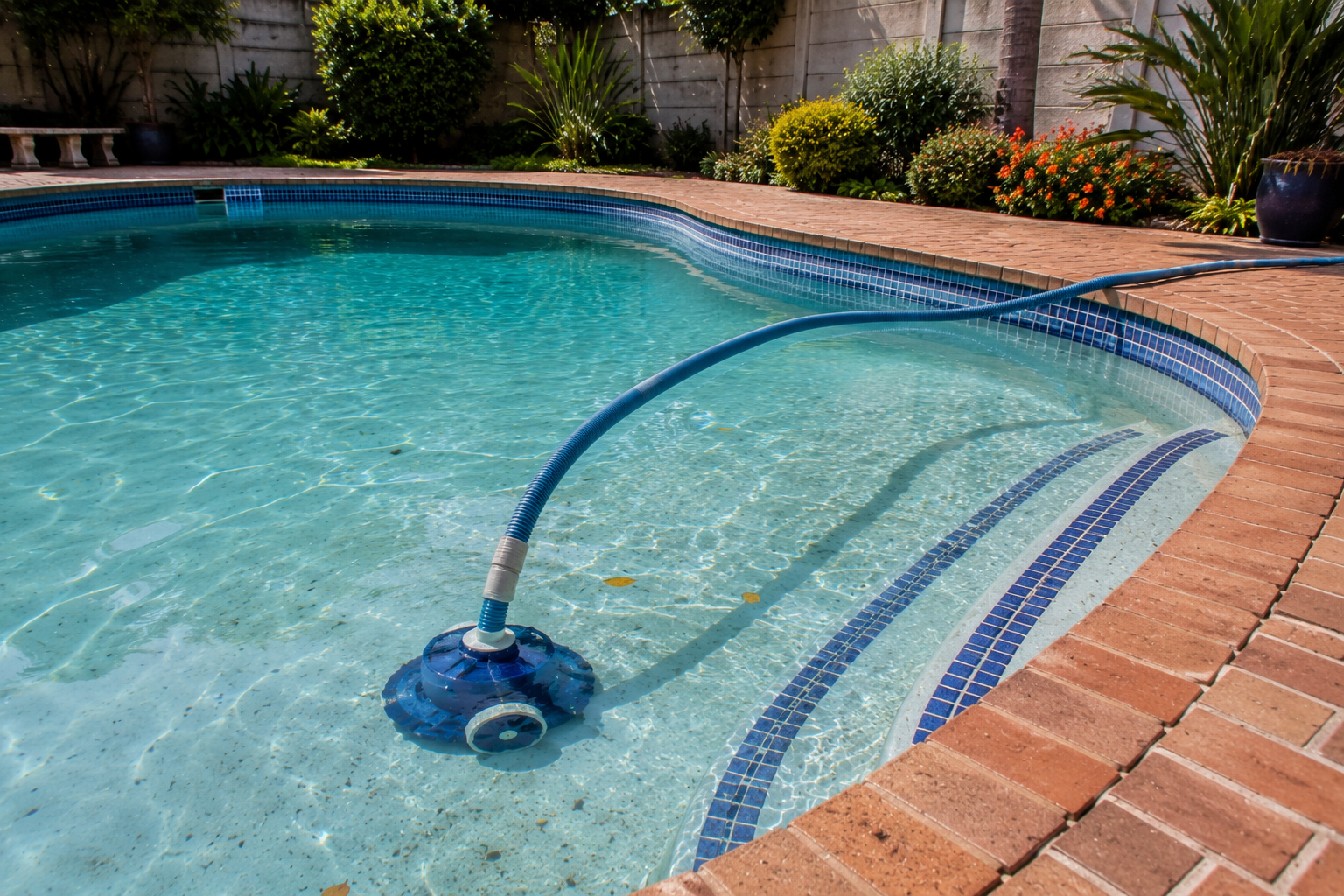
Few things frustrate pool owners more than watching the pool get dirtier while the vacuum sits motionless at the bottom. In many Zimbabwean homes, pool vacuums are relied on heavily to keep the water clean, especially during summer when dust, leaves, insects, and algae build up quickly.
When the vacuum suddenly stops moving, many homeowners immediately assume the unit is broken and needs replacing. In reality, the problem is often much simpler. Weak suction, blocked hoses, dirty filters, air leaks, or circulation problems are usually the real cause.
The good news is that many vacuum problems can be identified with a few simple checks before paying for a technician callout. Understanding how the vacuum system works also helps prevent the same issue from happening repeatedly.
Pool Vacuum Not Working Properly?
Fill in the form below for help with pool suction problems, circulation issues, and swimming pool maintenance solutions.
Why Pool Vacuums Stop Moving
Most automatic pool vacuums depend on water suction and circulation to move properly around the pool. If the flow of water weakens, the vacuum loses the power it needs to crawl across the floor and walls.
This means the vacuum itself is not always the actual problem. In many cases, the circulation system feeding the vacuum is what needs attention.
Dirty filters are one of the biggest causes of weak vacuum movement. As filters become clogged with dirt and debris, water flow decreases throughout the entire system. The vacuum then struggles to move because suction pressure drops below the level required for proper operation.
Blocked pipes and hoses are also very common, especially during windy periods or after storms when leaves and debris enter the pool in larger amounts.
Sometimes the problem develops gradually. The vacuum moves slower and slower over time until it eventually stops completely.
Weak Suction Is Usually the First Clue
If the vacuum is barely moving or repeatedly stopping, weak suction is usually the first thing to investigate.
Many homeowners only look directly at the vacuum while ignoring what is happening at the pump and filtration system. However, the vacuum depends entirely on strong circulation to operate correctly.
One quick way to test suction is by checking the skimmer box. If the suction at the skimmer feels noticeably weaker than normal, the issue may involve:
- a dirty filter
- blocked circulation
- a clogged pump basket
- air entering the system
- pump performance problems
Pools with undersized or aging pumps may also struggle to maintain enough suction for automatic vacuums, especially if the filtration system is already partially blocked.
This becomes even more noticeable in larger pools where circulation demands are higher.
Dirty Filters Can Stop the Vacuum Completely
A dirty filter is one of the most common reasons pool vacuums stop moving properly.
As the filter traps dirt, algae, leaves, and debris, water flow gradually becomes restricted. The pump must work harder to circulate water, and eventually the vacuum no longer receives enough suction pressure to function correctly.
Many homeowners focus on the vacuum itself without realising the filter is the real source of the problem.
Sand filters usually require regular backwashing to remove trapped debris. Cartridge filters need cleaning once buildup becomes excessive. Neglecting this maintenance reduces circulation efficiency throughout the entire pool system.
One common sign of a dirty filter is rising pressure on the filter gauge. If the pressure is much higher than normal, the system may already be struggling.
Routine swimming pool maintenance helps prevent these circulation problems before they begin affecting vacuum performance visibly.
Need Help With Your Pool Vacuum?
Fill in the form below for help with suction problems, filtration issues, vacuum repairs, and swimming pool maintenance solutions.
Air Leaks Can Disrupt Vacuum Movement
Pool vacuums rely on consistent suction pressure. If air enters the circulation system, the suction becomes unstable and the vacuum may stop moving properly.
Air leaks often occur around:
- hose connections
- pump lids
- skimmer fittings
- worn seals
- cracked vacuum hoses
Sometimes small bubbles returning into the pool through the return jets are the first warning sign that air is entering the system somewhere.
Even relatively small leaks may weaken vacuum performance significantly.
Older vacuum hoses commonly develop tiny cracks over time, especially after long exposure to sunlight and harsh weather conditions. These cracks may not always appear obvious visually but can still disrupt suction enough to affect movement.
Blocked Hoses and Pipes Are Very Common
Zimbabwe’s climate creates plenty of debris that can clog pool systems. Leaves, twigs, insects, dirt, and organic material often collect inside hoses, skimmer lines, or suction ports.
If debris becomes lodged inside the vacuum hose or circulation line, water flow drops sharply and the vacuum slows down or stops moving altogether.
Some homeowners assume the pump is failing when the real issue is simply a blockage restricting water flow.
Checking the hose sections individually often helps identify where the blockage is located. In some cases, disconnecting and flushing the hoses restores normal operation immediately.
Pools surrounded by trees usually experience these problems more frequently because debris enters the system faster during windy conditions.
Incorrect Valve Settings Can Affect Suction
Some pool systems include multiple suction lines and valves that control how water flows through the circulation system.
If these valves are adjusted incorrectly, the vacuum may not receive enough suction to operate properly.
For example, suction may accidentally be redirected more heavily toward the main drain instead of the skimmer line connected to the vacuum. Even though the pump is running normally, the vacuum then receives insufficient flow to move correctly.
Homeowners sometimes adjust valves while backwashing or cleaning and forget to return them to the correct operating position afterward.
This is a surprisingly common cause of vacuum problems.
Worn Vacuum Parts Can Reduce Movement
Automatic pool vacuums contain moving internal parts that wear down gradually over time.
Diaphragms, gears, wheels, flaps, bearings, and internal seals eventually deteriorate through normal use. Once these components wear out, the vacuum may:
- move slowly
- get stuck repeatedly
- stop changing direction
- lose climbing ability
- stop moving completely
Older vacuums often develop multiple small wear issues simultaneously, making performance increasingly unreliable.
In some cases, replacing worn parts restores the vacuum fully. In other situations, replacing the entire unit becomes more practical long term.
DIY Checks Before Calling a Technician
Before scheduling professional repairs, there are several simple checks homeowners can do themselves.
Start by cleaning the pump basket, skimmer basket, and filter system thoroughly. Check whether the filter pressure improves afterward and whether suction becomes stronger.
Inspect the vacuum hose carefully for cracks, loose fittings, or trapped debris. Make sure all hose connections are sealed properly and fully submerged to avoid air entering the system.
Check that the pump is circulating water strongly and that the skimmer suction feels normal. Weak circulation often points to larger filtration or pump problems affecting the vacuum indirectly.
It is also worth checking the valve positions around the pump and filtration system to confirm the vacuum line is receiving proper suction.
Many vacuum problems are solved during these basic inspections without requiring major repairs.
When It Is Time to Call a Technician
If the vacuum still refuses to move after the basic checks, the issue may involve deeper circulation or equipment problems.
Persistent suction loss, pump noise, leaking equipment, motor overheating, blocked underground pipes, or repeated vacuum failures usually require professional diagnosis.
In some pools, the problem may involve aging circulation systems, undersized pumps, or hidden plumbing restrictions that are difficult to identify without proper inspection equipment.
Professional technicians can also test whether the vacuum itself is failing internally or whether the problem originates elsewhere within the pool system.
Older pools sometimes develop several circulation problems simultaneously, making professional troubleshooting far more efficient than trial-and-error repairs.
Final Thoughts
Pool vacuums usually stop moving because of circulation problems rather than complete equipment failure. Dirty filters, blocked hoses, air leaks, weak suction, and incorrect valve settings are among the most common causes.
The good news is that many of these issues can be identified with simple DIY checks before calling a technician unnecessarily.
Consistent maintenance, proper filtration care, and regular circulation inspections also help prevent vacuum problems from returning repeatedly.
When the circulation system is functioning correctly, most automatic pool vacuums operate far more reliably and keep the pool cleaner with far less effort.
Is Your Pool Vacuum Not Moving?
Fill in the form below for professional help with pool vacuums, circulation systems, filtration problems, and swimming pool maintenance.


Comments are closed