


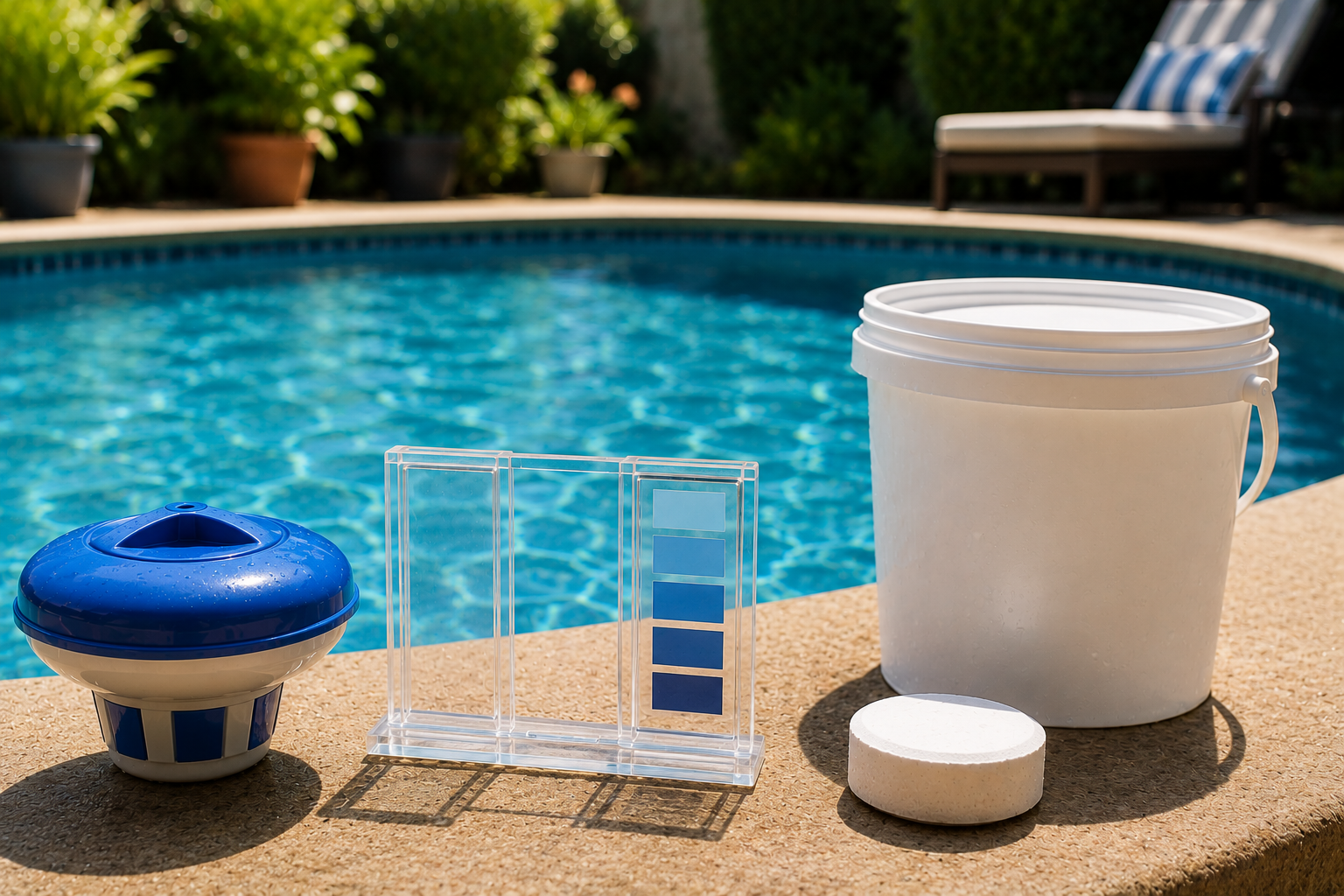
Many swimming pool owners assume that a strong chlorine smell means the water is extra clean. In reality, the opposite is often true. That sharp chemical smell many people associate with “clean pools” is usually a warning sign that the pool chemistry is unbalanced and struggling to stay properly sanitised.
This misunderstanding is extremely common in Zimbabwe, especially during hot summer periods when pools require more chemical attention and chlorine gets consumed much faster by sunlight, heat, and heavy usage.
Chlorine plays a critical role in keeping swimming pools safe and healthy, but simply adding more chlorine is not always the solution. Proper pool chemistry depends on balance, circulation, filtration, and understanding what chlorine is actually doing inside the water.
When chlorine levels, contaminants, and water balance interact incorrectly, problems such as strong odours, eye irritation, cloudy water, algae growth, and skin discomfort begin appearing quickly.
Understanding how chlorine works helps pool owners maintain cleaner, safer water while avoiding many of the most common maintenance mistakes.
Struggling With Pool Water Chemistry?
Fill in the form below for professional help with chlorine balancing, pool cleaning, and swimming pool maintenance solutions.
Why Pools Need Chlorine in the First Place
Swimming pools constantly collect contaminants even when the water appears visually clean.
Dust, sweat, sunscreen, oils, leaves, insects, bacteria, rainwater contamination, and microscopic organic material enter the pool continuously. Without sanitisation, the water would quickly become unsafe and unhealthy for swimming.
Chlorine’s primary job is to disinfect the water by destroying bacteria, algae, and harmful microorganisms before they multiply.
It also helps oxidise organic contaminants that naturally build up in the water through normal pool usage.
In Zimbabwe’s warm climate, sanitisation becomes even more important because heat accelerates algae growth and bacterial activity significantly. Pools exposed to strong sunlight and high temperatures usually require more consistent chlorine management compared to cooler environments.
Without proper chlorine levels, even pools with excellent filtration systems can quickly develop cloudy water, algae outbreaks, or unsafe swimming conditions.
Chlorine Does More Than Just Kill Algae
Many homeowners mainly associate chlorine with preventing green pool water, but chlorine actually performs several important functions simultaneously.
It helps:
- destroy bacteria
- prevent algae growth
- oxidise contaminants
- improve water clarity
- reduce harmful microorganisms
- support overall water hygiene
The filtration system physically removes dirt and debris from the water, while chlorine chemically sanitises what the filter cannot remove on its own.
This is why proper circulation and filtration are just as important as chemical balance. Even well-chlorinated pools struggle if water movement becomes weak or filtration efficiency drops.
Poor circulation creates stagnant areas where chlorine may not distribute evenly throughout the pool.
Why Strong Chlorine Smells Are Usually a Warning Sign
One of the biggest pool maintenance myths is the belief that strong chlorine smells indicate high chlorine levels and extra-clean water.
In reality, strong “chlorine smells” are usually caused by chloramines.
Chloramines form when chlorine reacts with contaminants such as sweat, body oils, sunscreen, urine, and organic waste inside the pool. Instead of remaining as free chlorine available for sanitising, the chlorine becomes partially consumed by these contaminants.
This chemical reaction creates the strong smell many people incorrectly associate with cleanliness.
Ironically, pools with the strongest chlorine smell are often pools struggling with poor water chemistry and insufficient effective sanitisation.
A properly balanced swimming pool should usually have very little noticeable chlorine smell at all.
Chloramines Cause More Than Just Smells
Chloramines do not only create unpleasant odours. They also contribute to many common swimmer complaints.
Eye irritation, red eyes, dry skin, throat irritation, and breathing discomfort are often linked more closely to chloramine buildup than to properly balanced chlorine itself.
Many people assume chlorine alone causes these symptoms, but poorly balanced water chemistry is often the real issue.
Cloudy water may also develop when chloramine levels become excessive because the sanitisation process becomes less effective overall.
Pools with heavy swimmer usage, poor circulation, weak filtration, or inconsistent maintenance often develop chloramine problems more aggressively.
Indoor pools usually experience stronger chloramine odours because the compounds become trapped in enclosed air spaces. However, outdoor pools in Zimbabwe can still develop noticeable buildup during hot weather and periods of heavy use.
Concerned About Chlorine Levels or Pool Water Quality?
Fill in the form below for help with water testing, chemical balancing, algae prevention, and swimming pool maintenance solutions.
Why Pool Shocking Is Important
Pool shocking helps restore proper sanitisation by breaking down chloramines and organic contamination inside the water.
During shocking, chlorine levels are temporarily raised high enough to destroy contaminants more aggressively and restore healthier water conditions.
Many homeowners think shocking is only necessary when the pool turns green. In reality, shocking also helps maintain proper chlorine efficiency even when the water still looks relatively normal visually.
Pools with strong chlorine smells, cloudy water, or persistent irritation problems often benefit from proper shock treatment.
However, shocking should always be done correctly because excessive chemical treatment can create additional water balance problems if handled improperly.
This is one reason professional swimming pool maintenance services often include routine water testing and chemical balancing rather than simply adding chlorine blindly.
Zimbabwe’s Climate Makes Chlorine Management More Difficult
Zimbabwe’s strong sunlight and warm temperatures place constant pressure on chlorine levels.
Ultraviolet rays from the sun break down chlorine naturally throughout the day. During hot summer periods, pools may lose chlorine surprisingly quickly if the chemistry is not stabilised properly.
Heavy rainstorms also affect water chemistry by diluting chlorine levels and introducing contaminants into the pool.
Pools that receive heavy swimmer usage during holidays or entertainment periods often consume chlorine faster because of increased organic contamination.
This is why pool owners in Zimbabwe often need more regular water testing and chemical adjustment during summer compared to cooler months.
Neglecting chlorine balance for even a short period during very hot weather can quickly lead to algae growth and cloudy water problems.
Why Adding More Chlorine Is Not Always the Solution
One of the most common homeowner mistakes is continuously adding more chlorine whenever problems appear without understanding the underlying chemical balance first.
If chloramines are already present, simply adding small amounts of chlorine repeatedly may not fully solve the problem. Poor filtration, unstable pH, inadequate circulation, or excessive contaminants may still prevent the chlorine from working effectively.
In some situations, excessive chemical additions actually worsen irritation and water balance issues.
Proper water chemistry depends on several factors working together:
- chlorine levels
- pH balance
- alkalinity
- circulation
- filtration
- contaminant control
This is why professional testing is often more effective than guessing chemical quantities based purely on appearance or smell.
Signs Your Pool Chemistry May Be Unbalanced
Some warning signs develop gradually, while others appear quickly after storms, heavy usage, or maintenance neglect.
Strong chlorine smells, cloudy water, recurring algae growth, skin irritation, red eyes, or rapidly fluctuating chlorine levels often indicate deeper chemistry problems within the pool.
Pools requiring constant chemical correction may also have circulation or filtration issues affecting sanitisation efficiency.
In some cases, older equipment or weak circulation systems prevent chlorine from distributing evenly throughout the pool, creating persistent balancing difficulties.
Consistent maintenance and proper testing usually prevent these larger chemistry problems from developing.
Proper Pool Maintenance Reduces Chlorine Problems
Healthy pool chemistry depends on more than chlorine alone.
Regular cleaning, proper filtration, balanced circulation, routine backwashing, and professional water testing all help chlorine work more effectively while reducing chloramine buildup.
Pools with neglected filters, weak circulation, or excessive debris accumulation often struggle to maintain stable chemistry even when chlorine is added regularly.
Preventative maintenance is usually far cheaper and easier than recovering severely unbalanced water later.
Many homeowners only realise how important proper water balance is after dealing with repeated algae outbreaks, cloudy water, or persistent chemical irritation problems.
Final Thoughts
Chlorine plays an essential role in keeping swimming pools safe, clean, and free from harmful bacteria and algae. However, a strong chlorine smell is usually not a sign of extra cleanliness.
In many cases, strong odours actually indicate chloramine buildup and unbalanced pool chemistry caused by contaminants overwhelming the sanitisation system.
A properly maintained swimming pool should generally have clear water, stable chemistry, efficient circulation, and very little noticeable chlorine smell.
Understanding how chlorine really works helps homeowners avoid common maintenance mistakes while keeping pool water healthier, cleaner, and more comfortable for swimming.
Need Help Balancing Your Pool Chemistry?
Fill in the form below for professional help with chlorine balancing, water testing, algae prevention, and swimming pool maintenance.

Comments are closed