


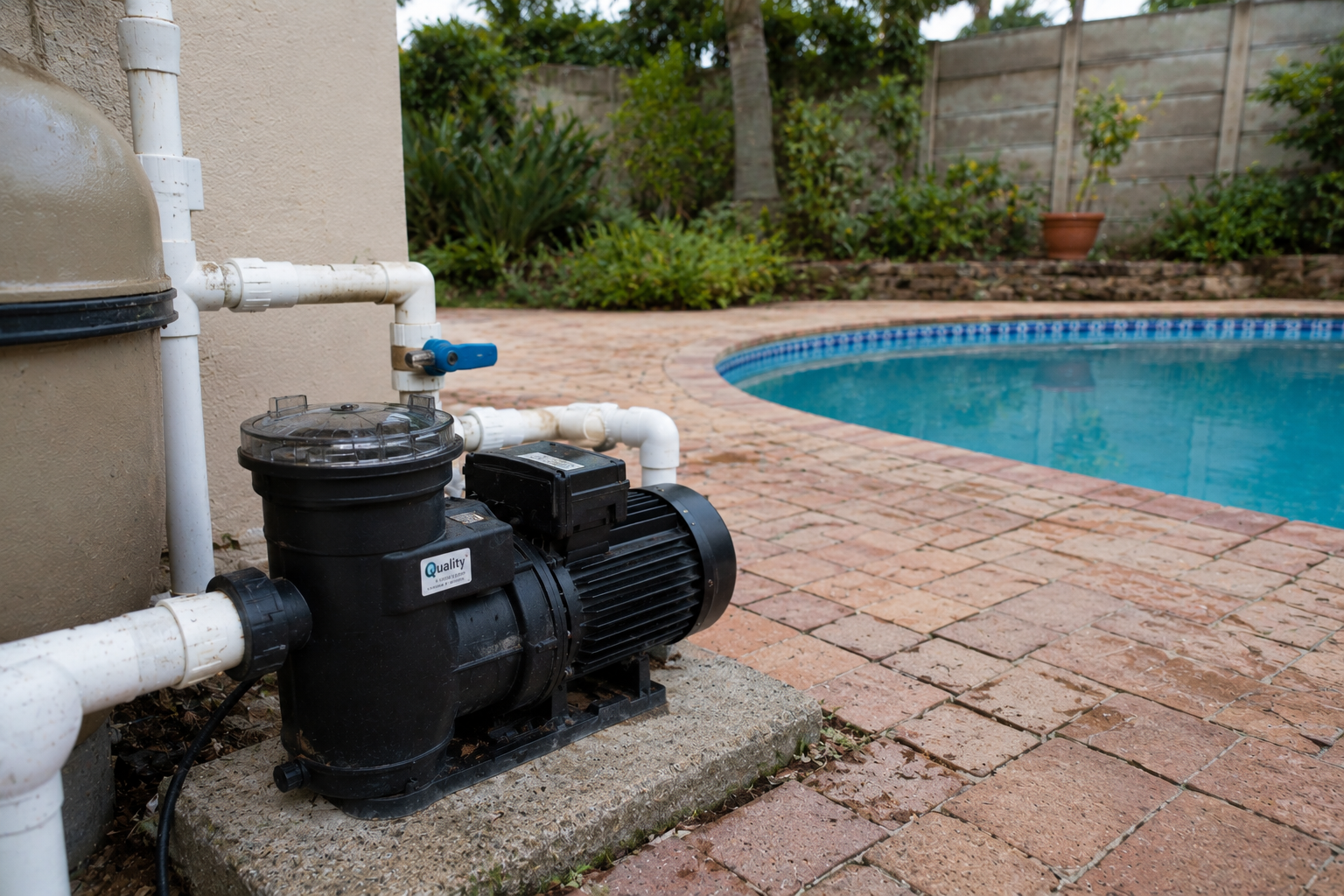
Many swimming pool problems begin with the pump. Cloudy water, weak circulation, algae growth, dirty pool walls, and poor filtration are often linked to pumps that are either too small, too powerful, outdated, or simply inefficient for the size of the pool.
In Zimbabwe, pool pumps also affect something else many homeowners worry about: electricity costs. A poorly chosen pump can increase monthly power usage significantly while still failing to circulate the water properly.
At the same time, many pool owners end up overspending on oversized pumps they never actually needed.
Choosing the right pool pump is not simply about buying the biggest or most expensive option available. The correct pump should match the size of the pool, the filtration system, the plumbing layout, and the amount of daily pool usage.
Understanding how pool pump sizing works helps homeowners avoid unnecessary operating costs, poor circulation problems, and expensive equipment replacements later.
Need Help Choosing the Right Pool Pump?
Fill in the form below for expert advice on pool pumps, sizing, filtration systems, and energy-efficient pool circulation solutions.
Why the Pool Pump Matters So Much
The pool pump is essentially the heart of the entire circulation system. It pulls water through the skimmers and main drain, pushes it through the filtration system, and returns clean water back into the pool.
Without proper circulation, even the best pool chemicals struggle to work effectively. Water becomes stagnant, debris accumulates, algae grows more easily, and filtration efficiency drops significantly.
In Zimbabwe’s climate, circulation becomes even more important because warm temperatures, dust, leaves, and storms place constant pressure on pool water quality. Pools with weak circulation often develop cloudy water much faster during summer months.
Many homeowners focus heavily on visible pool features such as paving, lighting, or finishes while overlooking the importance of the circulation system itself. However, poor pump performance eventually affects almost every part of the pool.
This is one reason professional swimming pool maintenance services often include regular pump inspections and circulation checks as part of long-term pool care.
How Much Does a Pool Pump Cost in Zimbabwe?
Pool pump prices in Zimbabwe vary depending on the pump size, motor quality, brand, energy efficiency, and whether the pump is a standard or variable-speed model.
For smaller residential pools, basic single-speed pumps may start from around USD $250 to $600 depending on the brand and horsepower rating.
Mid-range residential pumps commonly range between USD $600 and $1,500, especially when better durability and stronger energy efficiency are required.
Higher-end variable-speed pumps can cost several thousand dollars depending on the technology and automation features included.
Commercial pool pumps for hotels, lodges, schools, or apartment complexes may cost even more because they must handle larger water volumes and heavier circulation demands.
Installation costs also vary depending on the plumbing layout, electrical work, and whether the pump is being installed as part of a new pool project or replacing older equipment.
Some homeowners are surprised to discover that the cheapest pump is not always the cheapest option long term. Low-quality pumps often consume more electricity, wear out faster, and struggle to maintain proper circulation efficiency over time.
What Size Pool Pump Do You Actually Need?
One of the most common mistakes pool owners make is assuming that a bigger pump automatically means better performance.
In reality, oversized pumps often create unnecessary electricity costs while placing excess pressure on the plumbing and filtration system.
The correct pump size depends mainly on how much water the pool contains and how quickly the water needs to circulate through the filtration system.
Most residential pools are designed to complete full water circulation within several hours. The goal is not maximum power.
The goal is balanced circulation that keeps the water consistently clean without wasting energy.
A smaller residential pool may only require a modest pump to maintain healthy circulation, while larger entertainment pools or commercial pools naturally require stronger systems because of higher water volume and heavier usage.
The plumbing layout also matters. Long pipe runs, multiple water features, heating systems, elevated equipment locations, or complex filtration setups may require different pump specifications even for pools of similar size.
This is why professional sizing matters. A pump should always be matched to both the pool and the filtration system rather than chosen purely based on horsepower numbers.
Not Sure If Your Pool Pump Is the Right Size?
Fill in the form below for expert help with pump sizing, circulation problems, and energy-efficient pool equipment solutions.
Why Oversized Pumps Can Cause Problems
Many homeowners assume oversized pumps are safer because they appear more powerful. Unfortunately, pumps that are too strong often create their own set of problems.
Excessively powerful pumps may increase electricity consumption dramatically without improving water quality proportionally.
They can also force water through the filtration system too quickly, reducing filtration efficiency instead of improving it.
High-pressure circulation may also place unnecessary strain on plumbing lines, seals, fittings, and filter tanks over time.
Some oversized pumps even create uncomfortable suction levels or excessive turbulence inside smaller pools.
This becomes especially important in Zimbabwe where electricity costs and power efficiency remain major concerns for many homeowners.
The ideal pump should provide efficient circulation without operating harder than necessary.
Variable-Speed Pumps vs Standard Pumps
Variable-speed pool pumps are becoming increasingly popular because they allow the circulation speed to adjust depending on the pool’s needs throughout the day.
Traditional single-speed pumps operate at full power continuously whenever they are switched on. While these systems are simpler and often cheaper upfront, they usually consume more electricity over time.
Variable-speed pumps operate differently. They can run at lower speeds for routine filtration and increase power only when necessary for cleaning cycles, backwashing, heating systems, or water features.
Although variable-speed pumps cost more initially, many homeowners recover the difference through reduced electricity usage over the long term.
For pools that operate daily throughout the year, the savings can become significant.
Variable-speed systems also tend to run more quietly and place less strain on the equipment itself because they avoid continuous full-speed operation.
Many homeowners upgrading older pools eventually replace outdated pumps with variable-speed systems during larger pool renovation projects.
How Much Electricity Does a Pool Pump Use?
Electricity usage depends heavily on the size of the pump, the circulation schedule, and the efficiency of the system.
For many residential pools in Zimbabwe, the pool pump is one of the biggest ongoing electricity expenses associated with pool ownership.
Older or oversized pumps may consume surprisingly large amounts of electricity, especially if they run longer than necessary each day. Some homeowners unknowingly operate pumps for excessive hours because they assume longer circulation always improves water quality.
In reality, efficient circulation is more important than simply running the pump continuously.
Pools with energy-efficient pumps, balanced filtration systems, and proper maintenance often operate far more economically than pools with outdated equipment.
Heating systems also affect circulation demands because heated pools usually require more consistent water movement to distribute heat evenly throughout the pool.
This is one reason many homeowners upgrading to swimming pool heating systems also review their circulation equipment at the same time.
Signs Your Pool Pump May Be the Wrong Size
Circulation problems usually appear gradually rather than all at once. Many homeowners only realise the pump is struggling after water quality problems become noticeable.
Weak circulation often leads to cloudy water, algae growth, poor skimming performance, and debris collecting in certain areas of the pool. The filtration system may also struggle to maintain water clarity consistently.
Oversized pumps may create excessive pressure, noisy operation, high electricity bills, or unnecessary wear on plumbing components.
Strange sounds, leaking seals, overheating motors, or constantly fluctuating pressure readings may also indicate that the pump or filtration system is no longer operating efficiently.
Professional inspections help identify these issues before they lead to major equipment failure or expensive repairs.
When Should You Replace a Pool Pump?
Most quality pool pumps last several years when properly maintained, but eventually every pump reaches the point where repairs become less practical than replacement.
Frequent breakdowns, rising electricity usage, poor circulation, loud operation, leaking seals, or motor overheating are often signs the pump is nearing the end of its lifespan.
Older pumps may also struggle to meet the demands of upgraded pools that now include heating systems, water features, or larger filtration systems.
In some cases, replacing an inefficient older pump with a modern energy-efficient model significantly improves both circulation performance and monthly operating costs.
Many homeowners only realise how much electricity their old pump was wasting after upgrading to newer technology.
How to Reduce Pool Pump Running Costs
Reducing operating costs usually starts with choosing the correct pump size and improving overall circulation efficiency.
Pools with clean filters, balanced plumbing systems, and efficient circulation schedules generally require less electricity to maintain healthy water quality.
Running the pump only for the necessary number of hours each day also helps reduce power consumption without compromising filtration performance.
Pool covers can further reduce strain on the circulation system by limiting debris accumulation and helping maintain more stable water conditions.
Regular maintenance also plays an important role. Dirty filters, blocked plumbing lines, and neglected equipment force pumps to work harder than necessary, increasing both electricity usage and equipment wear over time.
Consistent servicing usually extends pump lifespan while keeping operating costs more manageable.
Final Thoughts
Pool pump costs in Zimbabwe vary depending on the size of the pool, the type of pump, energy efficiency, and the complexity of the circulation system.
While smaller residential pumps may cost only a few hundred dollars, larger variable-speed systems and commercial pumps can cost several thousand dollars depending on the installation requirements.
The most important factor is choosing a pump that matches the actual needs of the pool. Bigger is not always better, and the wrong pump can create unnecessary electricity costs, circulation problems, and equipment strain over time.
A properly sized and professionally installed pool pump improves water quality, protects the filtration system, reduces maintenance problems, and helps keep long-term operating costs under control.
Need Help Choosing a Pool Pump?
Fill in the form below to get expert advice on pool pump sizing, installation, circulation systems, and energy-efficient upgrades for your swimming pool.


Comments are closed