


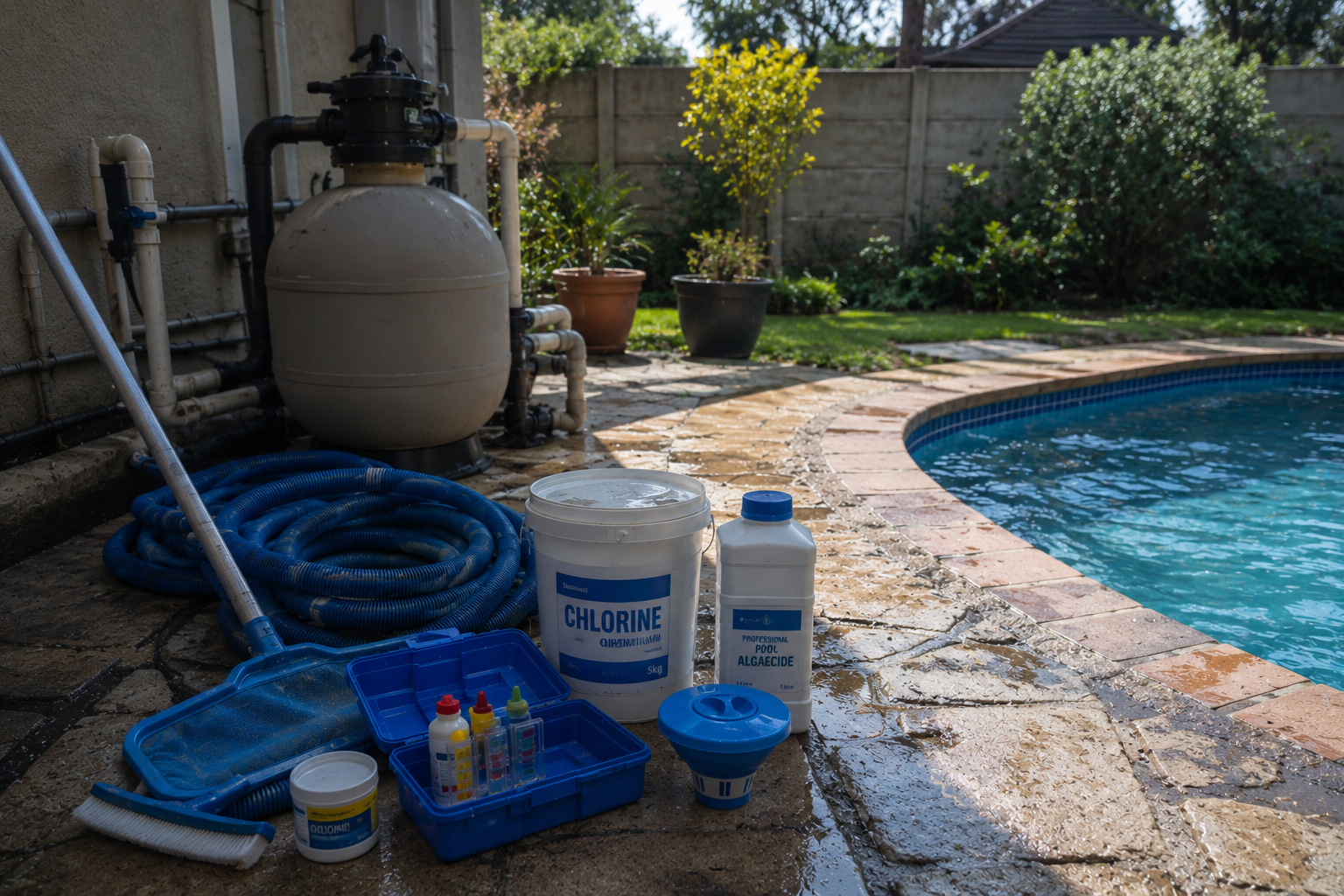
Many swimming pool owners only think about maintenance once something starts going wrong. The water turns cloudy, algae begins forming on the walls, the pump starts struggling, or the pool suddenly develops a strong chlorine smell. By that stage, what could have been simple routine maintenance often turns into a more expensive cleaning or repair problem.
In Zimbabwe, regular pool servicing is especially important because pools are exposed to dust, strong sunlight, storms, leaves, insects, and fluctuating temperatures throughout the year. Pools that rely on borehole water may also experience different water balance challenges compared to municipal water systems.
One of the biggest misconceptions is that pool servicing only means cleaning leaves from the surface. In reality, proper pool maintenance includes water balancing, backwashing, shocking, filter cleaning, circulation checks, and equipment inspections. Neglecting these areas often leads to algae growth, damaged pumps, blocked filters, staining, and higher long-term maintenance costs.
The good news is that most major pool problems are preventable when servicing is done consistently and correctly.
Need Help Maintaining Your Pool?
Fill in the form below to get professional pool cleaning and maintenance assistance for your property.
Why Regular Pool Servicing Matters
Swimming pools are constantly exposed to contamination, even when they appear clean on the surface. Dust, sunscreen, leaves, insects, rainwater, oils, and microscopic debris continuously affect water quality and circulation.
Zimbabwe’s climate makes this even more noticeable. During dry periods, wind and dust quickly affect pool water clarity. During rainy periods, storms introduce dirt, organic material, and chemical imbalances that can disrupt the entire filtration system.
Without regular servicing, pool water gradually becomes harder to balance chemically. Filters become clogged, circulation weakens, and algae begins growing more easily. Once algae takes hold, restoring the pool often becomes far more expensive and time-consuming than simply maintaining it consistently from the beginning.
Regular servicing also protects the equipment itself. Pumps, filters, chlorinators, and plumbing systems last longer when the pool remains properly balanced and clean. Poor maintenance places extra strain on the equipment and increases the likelihood of costly repairs later.
Many homeowners only realise the importance of maintenance after needing major pool renovation or repair work that could have been avoided with proper servicing.
How Often Should You Clean Your Pool?
For most residential pools in Zimbabwe, basic cleaning should happen at least once or twice a week. During hotter months or windy periods, some pools may require even more frequent attention because debris accumulates faster and algae develops more aggressively in warm conditions.
Routine cleaning usually involves skimming leaves and debris from the surface, brushing the walls and steps, vacuuming the floor, and emptying skimmer baskets. These tasks help maintain circulation and prevent organic material from building up inside the filtration system.
Pools located near trees often require more regular cleaning because leaves and pollen place additional pressure on the filtration system. Entertainment pools that experience heavy swimmer usage may also require more frequent maintenance because oils, sunscreen, and contaminants build up more quickly.
Some homeowners attempt to clean the pool only when it starts looking dirty, but this approach usually creates more work later. Consistent weekly cleaning is far easier and cheaper than trying to recover a neglected pool filled with algae or cloudy water.
Professional swimming pool maintenance services often help homeowners maintain a more consistent cleaning schedule, especially for larger pools or properties that are used frequently.
How Often Should You Backwash a Pool?
Backwashing is one of the most misunderstood parts of pool maintenance. Many pool owners either backwash far too often or not nearly enough.
A pool filter works by trapping dirt and debris as water circulates through the system. Over time, this trapped debris builds up inside the filter, restricting water flow and reducing filtration efficiency. Backwashing reverses the flow of water through the filter to flush out the accumulated dirt.
For many residential pools in Zimbabwe, backwashing is commonly needed about once a week or whenever the filter pressure rises noticeably above normal operating levels.
However, the exact frequency depends on several factors. Pools exposed to heavy dust, storms, leaves, or algae outbreaks may require more regular backwashing. Pools with undersized filtration systems may also need more frequent cleaning because the filter becomes overloaded faster.
At the same time, excessive backwashing is not ideal either. Backwashing too often wastes water and may reduce filtration efficiency unnecessarily.
One of the clearest signs that backwashing is needed is weak circulation. If the pool water starts looking dull, cloudy, or slow-moving around the returns, the filter may already be struggling.
Regular equipment inspections help identify these issues before they develop into larger circulation problems.
Need Help Maintaining Your Pool?
Fill in the form below to get professional pool cleaning and maintenance assistance for your property.
How Often Should You Shock Your Pool?
Pool shocking is another maintenance task many homeowners misunderstand. Some people shock the pool far too rarely, while others add excessive chemicals unnecessarily.
Shocking a pool means adding a high dose of chlorine or oxidising chemicals to eliminate bacteria, algae spores, organic contaminants, and chloramines that regular chlorination cannot fully remove.
For many residential pools, shocking every one to two weeks is often enough under normal conditions. However, several situations may require additional shocking.
Heavy rainfall, pool parties, algae growth, cloudy water, or strong chlorine smells are all signs the pool may need shock treatment sooner.
Zimbabwe’s hot climate can also increase the need for occasional shocking because warmer water encourages algae and bacterial growth more aggressively than cooler temperatures.
Many homeowners assume a strong chlorine smell means the pool contains too much chlorine. In reality, strong chlorine odours often indicate chloramines and poor water balance rather than excessive sanitisation.
Proper shocking helps restore water clarity and improve overall water quality when done correctly.
Seasonal Pool Maintenance in Zimbabwe
Pool maintenance schedules often change throughout the year depending on weather conditions.
During summer, pools usually require more frequent chemical balancing and cleaning because higher temperatures encourage algae growth and increase swimmer usage. Evaporation also becomes more noticeable, particularly for pools without covers.
During windy or dusty periods, filtration systems work harder because debris enters the water more frequently. Storms can also disrupt water chemistry significantly within a short period of time.
Winter maintenance is often neglected because some homeowners stop swimming regularly during colder months. However, completely ignoring the pool during winter usually creates major problems by the time summer returns.
Even during colder periods, the pool still requires circulation, cleaning, and chemical balancing. Allowing algae to develop during winter often leads to expensive recovery work later.
This is one reason many pool owners eventually invest in pool heating systems to maintain more consistent usage and maintenance routines throughout the year.
Signs Your Pool Needs Servicing
Many pool problems become visible long before major damage occurs. Recognising these warning signs early helps prevent more expensive repairs later.
Some of the most common indicators include cloudy water, algae growth, weak circulation, unusual pump noise, slippery walls, staining, strong chemical smells, or debris constantly returning to the pool after cleaning.
Pools that lose water unusually quickly may also have hidden leaks rather than simple evaporation. In Zimbabwe’s climate, some evaporation is normal, but excessive water loss often points to a larger problem that requires professional leak detection.
Ignoring these warning signs usually allows the situation to worsen gradually until cleaning alone is no longer enough to restore proper water quality.
Struggling to Keep Your Pool Clean?
Fill in the form below for professional pool cleaning, chemical balancing, and maintenance support.
DIY Maintenance vs Professional Pool Servicing
Some homeowners prefer handling maintenance themselves, especially for smaller residential pools with relatively simple equipment setups. Basic cleaning, skimming, and chemical balancing can often be managed successfully with the right knowledge and consistency.
However, larger pools, heavily used pools, or pools with advanced equipment often benefit from professional servicing because maintenance becomes more technical over time.
Professional maintenance helps identify problems early before they turn into major repair issues. Technicians can also monitor filtration performance, water chemistry, circulation efficiency, and equipment condition more accurately.
Many homeowners eventually realise that professional servicing actually saves money long term because it reduces equipment damage, prevents algae outbreaks, and improves overall system lifespan.
For hospitality properties, regular professional servicing is especially important because guests expect consistently clean and safe swimming conditions.
Why Neglected Pools Become Expensive
One of the biggest mistakes pool owners make is delaying maintenance to save money. Unfortunately, neglected pools almost always become more expensive over time.
A small algae problem can quickly turn into a full green pool recovery. Poor circulation can damage pumps and filtration systems. Unbalanced water chemistry can stain surfaces, corrode equipment, and shorten the lifespan of expensive components.
Even something as simple as ignoring filter maintenance can place extra strain on the entire circulation system.
Consistent maintenance is almost always cheaper than emergency repairs, equipment replacement, or large-scale cleaning recoveries.
This is why experienced pool professionals focus heavily on preventative maintenance rather than simply fixing problems after they appear.
Final Thoughts
Swimming pools in Zimbabwe require regular servicing to remain clean, safe, and cost-effective to maintain long term.
For most residential pools, weekly cleaning, routine backwashing, and regular shocking are essential parts of proper maintenance. The exact schedule depends on factors such as weather conditions, pool usage, surrounding vegetation, filtration quality, and water balance.
Consistent servicing not only improves water clarity and swimmer comfort but also protects the equipment itself from unnecessary wear and damage.
Whether maintenance is handled personally or professionally, the key is consistency. A well-maintained pool is far easier and cheaper to manage than a neglected pool that eventually requires major cleaning, repairs, or renovation work.
Need Professional Pool Maintenance?
Fill in the form below to get help with pool cleaning, backwashing, water balancing, and ongoing servicing for your swimming pool.


Comments are closed